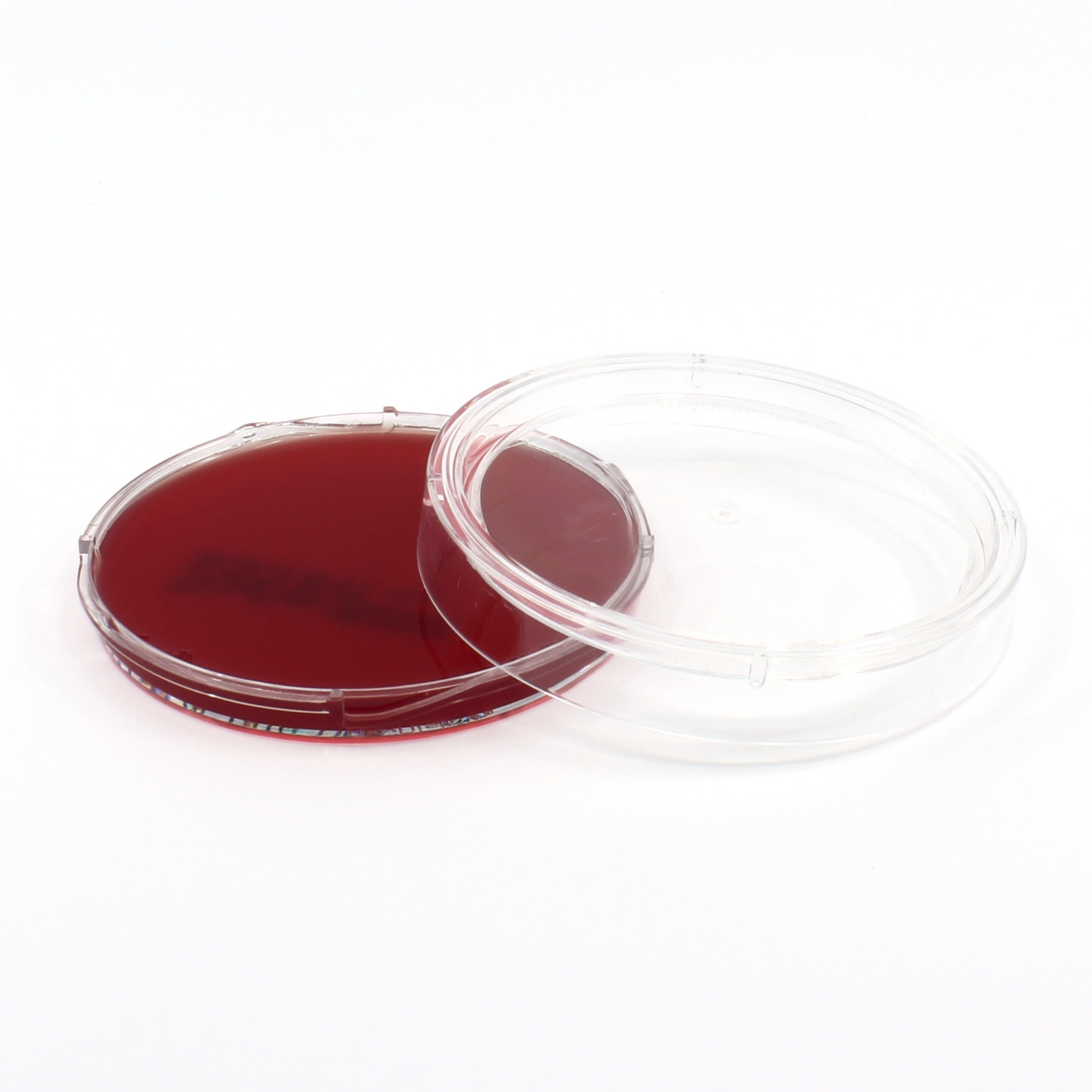
Schaedler Blood Agar OxyPlate™
Schaedler Blood Agar OxyPlate™ is a non-selective Schaedler blood agar plate for the primary isolation of anaerobic bacteria that creates and maintains its own anaerobic environment. The medium is enriched with 5% sheep blood, hemin, and vitamin K1 and manufactured pre-reduced anaerobically sterilized (PRAS). The dish is an OxyDish™: streak it, turn the lid to seal it, and put it in a standard incubator next to your aerobic plates. No jar, bag, sachet, or chamber.
At a glance
Catalog number: O-SCW-BA. Sold direct from Oxyrase
Medium: Schaedler agar with 5% sheep blood, hemin 10 mg/L, vitamin K1 5 mg/L. Initial pH 7.3.
Type: Non-selective, enriched. Supports strict and facultative anaerobes.
Anaerobiosis: Self-contained. Generated in the sealed plate by the Oxyrase® Enzyme System; regenerates after resealing, 5 cycles.
Incubation: Standard incubator, 35 to 37°C, inverted, stacked with aerobic plates.
Shelf life: 3 months from manufacture. 28-day minimum guaranteed on arrival.
Storage: 2 to 8°C in the open position. Ships at room temperature.
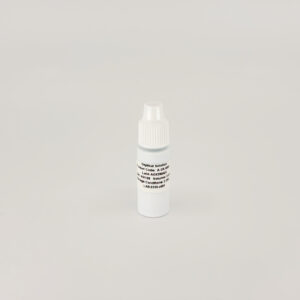
Included: OxyBlue™ anaerobic indicator.
Regulatory: For in vitro diagnostic use. Manufactured in Mansfield, Ohio under ISO 9001:2015.
When to use it
Schaedler is the non-selective plate in the OxyPlate™ line, the one every anaerobic specimen gets. Use it for primary isolation from abscess and wound aspirates, tissue, body fluids, and blood culture subcultures. It recovers the full range of anaerobes present, including fastidious and slow-growing species, and shows hemolysis and pigmentation for presumptive identification. QC organisms include Porphyromonas levii, one of the most oxygen-sensitive anaerobes routinely encountered, which grows with brown to black pigment in 2 to 3 days.
For a selective read from the same specimen, add KVL OxyPlate™ for gram-negative anaerobes or PEA OxyPlate™ to hold back gram-negative facultatives and Proteus. Each plate seals and incubates on its own, so a two- or three-plate setup per specimen needs no jar and no batching.
How the OxyPlate™ works
Every OxyPlate™ is poured in an OxyDish™, a patented dish with a track on the outside of the base and keys inside the lid. In the open position the lid rides high on the track and the plate vents like any other petri dish. Turn the lid to the closed position and a ring in the lid slides down onto the agar surface and forms a seal. Inside that sealed space the Oxyrase® Enzyme System consumes the oxygen that was trapped when the plate closed. The enzyme removes oxygen by using it, not by displacing it with gas or by chemical reductants, and it keeps working for as long as the plate is sealed, so the reduced state is robustly maintained through incubation.
That means the plate is its own anaerobic environment. There is no jar, bag, sachet, or chamber. Sealed OxyPlates™ go straight into a standard incubator at 35 to 37°C, inverted, stacked alongside aerobic plates. Growth can be read through the lid without opening the plate, and when you do open it to work up a colony, resealing regenerates anaerobiosis. Each plate supports 5 reseal-and-incubate cycles, which covers the standard 5-day anaerobic hold. An OxyBlue™ anaerobic indicator is included with every OxyPlate™ purchase.
The practical change is that anaerobic specimens no longer wait for a jar to fill. Each specimen is plated and incubated on its own, the moment it arrives, and read on its own schedule. Batching specimens for a jar is itself an oxygen exposure for the specimens that wait, and jars and chambers take bench, incubator, and floor space that a hospital laboratory rarely has to spare.
Watch the OxyPlate™ tutorial video and read the OxyPlate™ overview.
Formulation
Approximate composition per liter of deionized water. Initial pH 7.3 ± 0.2. Production lots may be adjusted to offset raw material variance in order to meet performance criteria.
| Component |
Amount |
| Enzymatic digest of casein |
2.5 g |
| Enzymatic digest of animal tissue |
2.5 g |
| Tryptic soy broth |
10.0 g |
| Yeast extract |
5.0 g |
| Dextrose |
5.0 g |
| L-cysteine |
0.6 g |
| Agar |
15.0 g |
| Hemin |
10.0 mg |
| Vitamin K1 |
5.0 mg |
| Sodium bisulfite |
0.1 g |
| Na2HPO4 |
2.0 g |
| NaH2PO4 |
1.15 g |
| Sheep blood |
51.0 mL |
| Oxyrase® Enzyme System |
proprietary |
Vitamin K1 and hemin supply growth factors for the pigmenting Prevotella and Porphyromonas group and improve recovery of some Bacteroides and gram-positive non-spore-forming anaerobes. Sheep blood adds nutrients and allows hemolytic reactions to be read.
Quality control
Samples of every lot are tested to Oxyrase specifications incorporating CLSI M22-A3. The following results are confirmed before release:
| Organism |
ATCC |
Expected result |
| Bacteroides fragilis |
25285 |
Growth in 2 to 3 days |
| Clostridium perfringens |
13124 |
Growth in 2 to 3 days; hemolysis |
| Fusobacterium nucleatum |
25586 |
Growth in 2 to 3 days |
| Porphyromonas levii |
29147 |
Growth in 2 to 3 days; brown to black pigment |
| Peptostreptococcus anaerobius |
27337 |
Growth in 2 to 3 days |
| Proteus mirabilis |
12453 |
Growth in 2 to 3 days; swarming inhibited |
Uninoculated medium is dark red and free of visible contamination. Each laboratory should establish its own QC program in line with its accreditation requirements; the organisms above are recommended for user QC.
Directions for use
Opening and streaking
- Warm plates to room temperature. Remove the plate from the pouch and handle it by the sides to protect the seal. Check for contamination, oxidation (brown rather than dark red), and the expiration date.
- Plates are shipped in the open position. If a plate is closed, set it upright, grasp the bottom of the lid at opposite ends, and pinch lightly inward. The seal disengages.
- Streak the plate. Keep inoculum at least 3 mm inside the ring impression, because organisms deposited under the ring can spread beneath the seal.
- Drop an OxyBlue™ indicator inside the plate.
Sealing and incubating
- Set the open plate upright on the bench and grasp the lid between thumb and finger.
- Apply light downward pressure while turning clockwise. Do not pierce the agar. The ring slides onto the agar surface and seals the plate.
- Incubate inverted (base up) at 35 to 37°C in a standard incubator, stacked with your aerobic plates.
- Read growth through the lid. To work up colonies, open the plate, pick, and reseal. The plate regenerates anaerobiosis after resealing, up to 5 times.
Full technique is shown in the OxyPlate™ tutorial video.
Storage, shelf life and guarantee
Plates ship at room temperature in the open position and should be stored at 2 to 8°C on receipt, still open. Expiration is 3 months from date of manufacture; the actual date is printed on each plate. Oxyrase guarantees at least 28 days of shelf life from the ship date, and longer dating can be arranged when you order. If Schaedler Blood Agar OxyPlate™ plates arrive short-dated, contaminated, or oxidized, or fail when used as directed, we refund the purchase price. Contact us with the lot number printed on the plate.
Limitations
- Supports both strict and facultative anaerobes. Colony types require additional identification.
- Organisms deposited within 3 mm of the ring impression can spread under the seal. Keep streaking inside the ring.
- The Oxyrase® Enzyme System contains a penicillin-binding protein that may interfere with penicillin and some related antibiotics. Do not use these plates for susceptibility testing.
- Contains material of animal origin. Source animals are documented free of BSE/TSE.
Frequently asked questions
Is Schaedler the same as Brucella blood agar?
Both are enriched non-selective anaerobic blood agars with hemin and vitamin K1. Schaedler uses a different peptone base with added dextrose and phosphate buffer. Either is a standard primary anaerobic plate; Schaedler is the non-selective medium offered in the OxyPlate™ format.
Do I need a jar, bag, or chamber?
No. The sealed OxyPlate™ is the anaerobic environment. It incubates in a standard incubator next to your aerobic plates.
How many times can I open and reseal it?
Five. Each reseal-and-incubate cycle regenerates anaerobiosis. Reading through the lid does not use a cycle.
Do I need to reduce the plate before inoculating?
No. OxyPlates™ are PRAS. Remove from the pouch, streak, seal, incubate.
Why is the shelf life 3 months?
The OxyDish™ seal and the enzyme dose are validated to 3 months at 2 to 8°C. The 28-day minimum on arrival still applies and longer dating can be arranged.
How do I know the plate went anaerobic?
The OxyBlue™ indicator included with your order turns from blue to colorless as oxygen is consumed and stays colorless while the plate is sealed.
How do I buy it?
Direct from Oxyrase. OxyPlates™ are not sold through distributors. Ask us about the volume pricing schedule, which counts any combination of OxyPlate™ media across all laboratory locations in a hospital system, or request a free evaluation kit.