Anaerobic Blood Agar · Clinical Microbiology
Anaerobic Blood Agar Plates That Work for You
Active enzyme protection. Bench-top stability. Faster recovery.
Not all anaerobic blood agar plates are created equal. Specifically, conventional plates lose their reduced state within minutes of opening. OxyPRAS Plus and OxyPlate, however, take a different approach. Both use an active enzyme embedded in the agar to scavenge oxygen in real time. As a result, your lab gets better recovery, longer shelf life, and a simpler workflow than conventional anaerobic blood agar.
Product Lines
Two Anaerobic Blood Agar Product Lines. One Enzyme System.
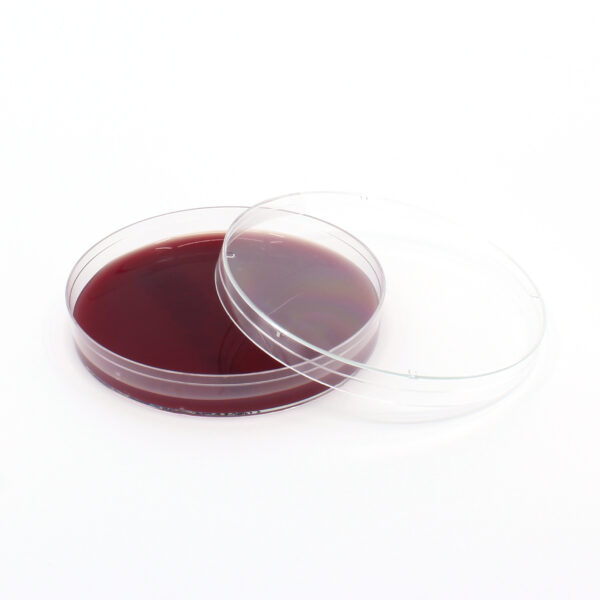
OxyPRAS Plus
- Active Oxyrase Enzyme System in the media
- Stays reduced for up to 2 hours on the bench
- 4-month shelf life at 2-8 °C
- Ready for automated streaking platforms
- Removes the need to post-reduce plates
- Streak at the bench, then incubate anaerobically
- Offered in 7 formulations plus bi-plates, 2-packs, and 3-packs
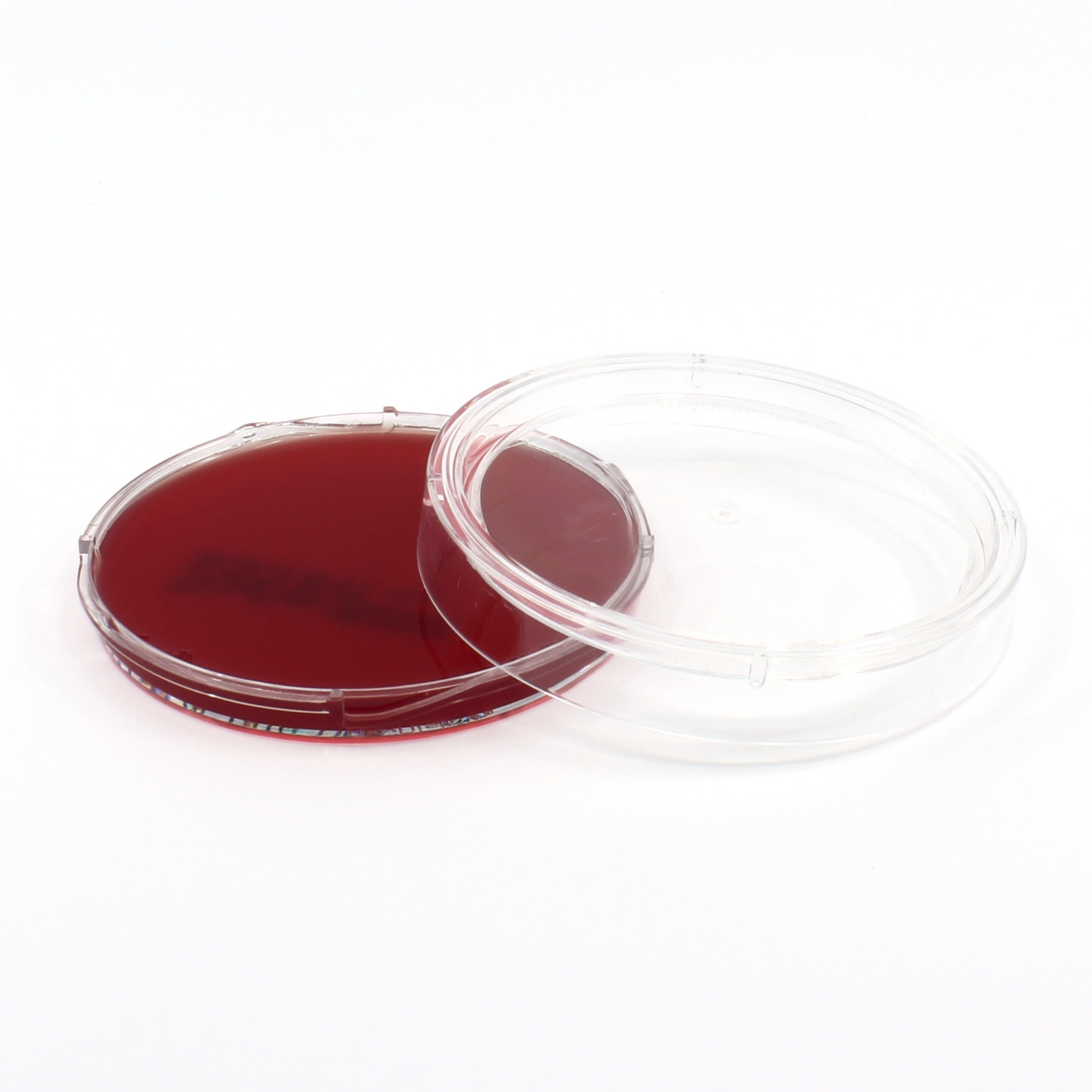
OxyPlate
- Same active Oxyrase Enzyme System
- 2-hour bench-top stability
- 3-month shelf life at 2-8 °C
- Simplest workflow available: open, streak, incubate
- Fully self-contained; works without jar, pouch, or chamber
- Ideal for custom workups with maximum flexibility
- Offered in Schaedler, PEA, and KVL Blood Agar
Workflow
Anaerobic Blood Agar Workflow Comparison
OxyPlate
Simply open, streak at the bench, and incubate.
In other words, no jar, chamber, or post-reduction is needed.
Simplest Workflow | 3 StepsOxyPRAS Plus
Open, streak at the bench, load a jar or pouch, then incubate.
As a result, post-reduction is eliminated with 2 hrs of bench-top flexibility.
Automation Ready | 4 StepsStandard Static PRAS / Conventional
Post-reduce, open, streak in the chamber, seal in a jar, then incubate.
Because there is no active protection, speed is critical to limit O₂ exposure.
Legacy Workflow | 5 StepsHow the Oxyrase Enzyme System Protects the Plate
Evidence
See the Difference
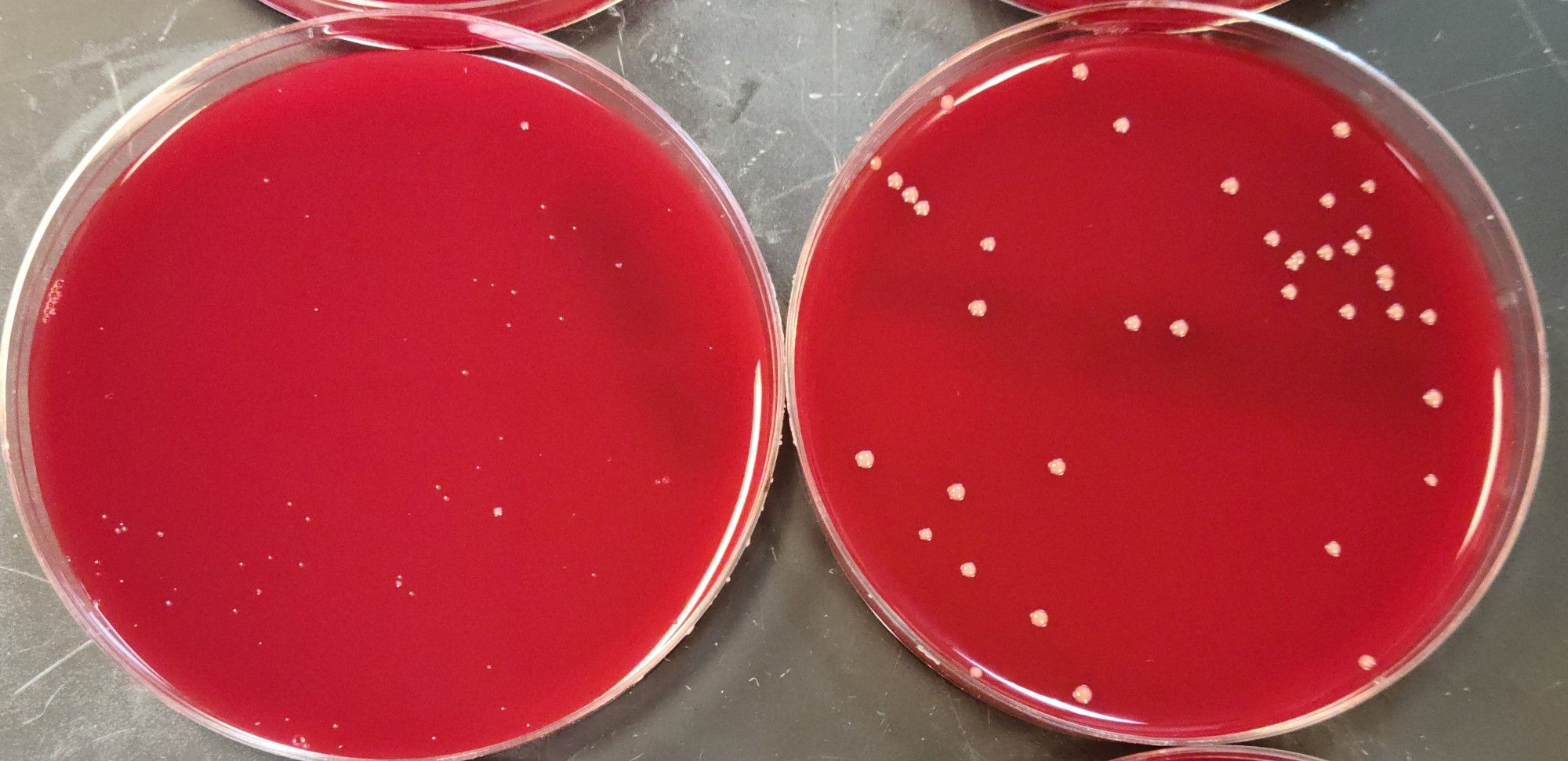
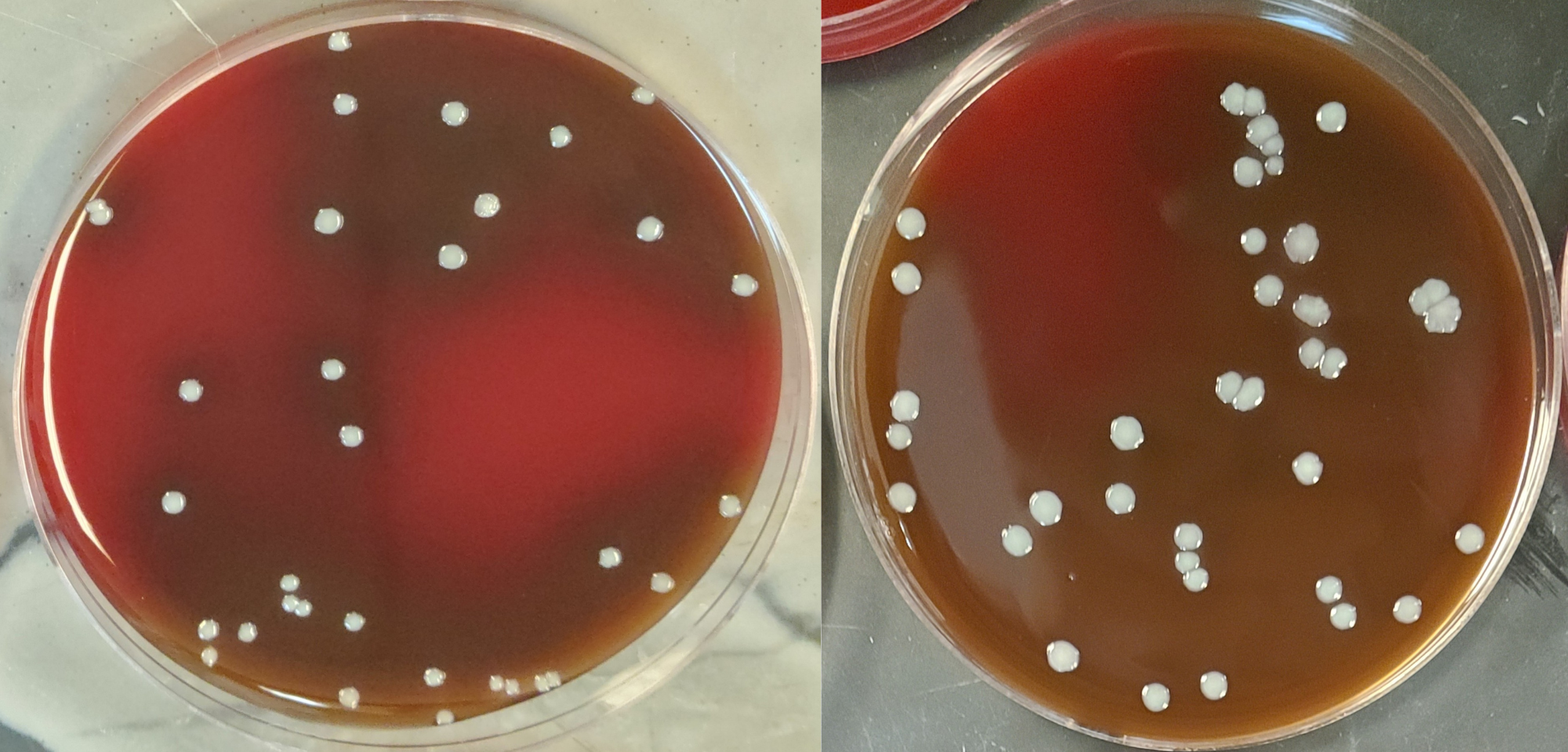
The photos below show colony shape and recovery on OxyPRAS Plus anaerobic blood agar compared to standard media. In each image, the left plate is conventional media while the right plate is OxyPRAS Plus. As you can see, enzyme-protected anaerobic blood agar consistently produces larger, more defined colonies. Furthermore, these results are repeatable across a wide range of fastidious organisms. For additional data, visit our anaerobic blood agar comparison studies.

Comparison
Anaerobic Blood Agar Plates: Side-by-Side Comparison
| Feature | OxyPRAS Plus | OxyPlate | Standard Static PRAS | Gas-Flush Packaged | Conventional |
|---|---|---|---|---|---|
| Active O₂ removal in media | Yes | Yes | No | No | No |
| Bench-top O₂ stability | Up to 2 hrs | Up to 2 hrs | Minutes | Minutes | None |
| Bench-top streaking | Yes | Yes | Chamber recommended | Chamber recommended | Chamber required |
| Anaerobic incubation method | Jar, pouch, or chamber | Self-contained | Jar, pouch, or chamber | Jar, pouch, or chamber | Jar, pouch, or chamber |
| Post-reduction needed | No | No | Yes | Yes | Yes |
| Automated streaker validated | Yes | Not yet validated | Check with mfr. | Check with mfr. | Check with mfr. |
| Shelf life | 4 months (2-8 °C) | 3 months (2-8 °C) | ~90 days | Varies | ~70 days |
| Workup packs | 2-packs, 3-packs, bi-plates | Individual plates | Some suppliers | Some suppliers | Limited |
| Pricing | Request a quote | Request a quote | Contact supplier | Contact supplier | Contact supplier |
Shelf Life
How Shelf Life Compares Across Anaerobic Blood Agar Types
Longer shelf life means less waste and fewer reorders. Consequently, the anaerobic blood agar manufacturing method you choose has a direct impact on inventory costs. Below is how each type of anaerobic blood agar stacks up.
Shelf Life Comparison
Formulations
Available Formulations
Both anaerobic blood agar product lines come in multiple formulations to fit different clinical needs. For instance, OxyPRAS Plus covers seven anaerobic blood agar media types including bi-plates and multi-packs, while OxyPlate focuses on three core formulations. Below is a quick look at what is available.
| Formulation | Purpose | OxyPRAS Plus | OxyPlate |
|---|---|---|---|
| Brucella Blood Agar | Primary nonselective isolation | Individual, 2-pack, 3-pack | — |
| PEA Blood Agar | Selective for gram-positive anaerobes | Individual, 3-pack | Individual |
| KVL Blood Agar | Selective for gram-negative anaerobes | Individual, 3-pack | Individual |
| BBE Agar | B. fragilis group selection | Individual | — |
| BBE/KVL Bi-Plate | Two media, one plate | Bi-plate | — |
| StrictAna Blood Agar | Most O₂-sensitive anaerobes | Individual | — |
| Schaedler Blood Agar | Enriched nonselective alternative | — | Individual |
View product inserts for complete specifications, or download our plated media sample guide.
FAQ
Frequently Asked Questions
What is the difference between OxyPRAS Plus and OxyPlate?
Both product lines use the Oxyrase Enzyme System and offer 2-hour bench-top stability. However, they serve different lab needs. OxyPRAS Plus provides the widest formulation range, workup packs, automation validation, and a 4-month shelf life. In contrast, OxyPlate delivers the simplest workflow: open, streak, and incubate with no jar, chamber, or post-reduction required. It carries a 3-month shelf life. For a full organism list, see supported microorganisms.
Do these plates need an anaerobic chamber or jar?
It depends on which anaerobic blood agar product line you choose. OxyPlate is fully self-contained from inoculation through incubation, so no anaerobic equipment is needed at any step. OxyPRAS Plus, on the other hand, can be streaked at the bench without a chamber but still requires a jar, pouch, or chamber for anaerobic incubation. Either way, the 2-hour bench-top stability of our anaerobic blood agar gives your team significant processing flexibility.
How does the Oxyrase Enzyme System work?
The enzyme is embedded directly in the agar, where it actively consumes dissolved oxygen in real time. Because of this, the media stays reduced even after exposure to air. By comparison, standard static PRAS plates have no active mechanism and begin re-oxidizing immediately once opened. Learn more about the Oxyrase Enzyme System.
What is the shelf life of anaerobic blood agar plates?
Shelf life varies by manufacturing method. OxyPRAS Plus anaerobic blood agar lasts 4 months at 2-8 °C, while OxyPlate lasts 3 months under the same conditions. In comparison, standard static PRAS runs approximately 90 days, and conventional plates typically expire in 70 days or less.
Try It in Your Lab
To get started, request free anaerobic blood agar sample plates or calculate your per-test savings.