Automated Microbiology Streaking: Navigating Anaerobic Bacteria
Automated Microbiology Streaking
Navigating Anaerobic Bacteria Plating with Copan WASP and BD Kiestra
If your lab runs a Copan WASP or BD Kiestra, you already know the pitch. Consistent streaks, no tech-to-tech variability, and a throughput that manual plating can’t touch. For aerobic specimens that’s mostly the end of the story.
Anaerobes are a different conversation. The same workflow that makes automation efficient for urines and wound swabs is the workflow that leaves anaerobic plates sitting in ambient air long enough to matter. Whether that’s a problem depends almost entirely on the media you load into the machine.
Here’s what’s actually happening on the deck, why some media types fall apart in that environment, and what to do about it.
Understanding Automated Streakers in Anaerobic Plating
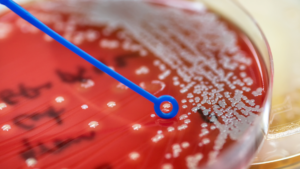
The Copan WASP uses a disposable loop and streaks plates in sequence after the specimen is inoculated. Plates come out of the media stacker, get inoculated, get streaked, and move to the output rack or directly into a Copan WASPLab incubator if the lab has the full track. The hands-off time is great. The trade-off is that any plate sitting in a stacker, on the streaking deck, or in an output queue is sitting in room air.
The BD Kiestra InoqulA does the same basic job with rolling magnetic beads instead of a loop. Same upside, same trade-off. Kiestra’s media sorter holds up to 48 plate types and the system is designed to work as part of a fully connected track with imaging and reading downstream.
Both platforms are excellent at what they’re designed to do. Neither one was designed with strict anaerobes specifically in mind, and neither shuttles plates into an anaerobic environment immediately after streaking. That gap, between when the plate comes out of the cooler and when it hits the anaerobic chamber or jar, is where the media question gets interesting.
The Media Categories, Honestly
There are basically four options for anaerobic plates, and each one behaves differently when it’s exposed to air on an automation deck.
Non-reduced plates. Cheap, easy to store, fine for aerobes. For strict anaerobes they’re a non-starter. The dissolved oxygen in the agar inhibits growth before you even get to the incubator. Nobody trying to recover Peptostreptococcus or Fusobacterium is reaching for these.
Post-reduced plates. Standard plates that you reduce in an anaerobic chamber after pouring. They work, but the reduction is fragile. Pull them out for any length of time and they re-oxidize. In an automated workflow with sorting and queuing time, you’re often re-oxidizing the plate before it gets streaked.
Pre-reduced plates. Reduced before packaging, better than the first two options, but stability is still the limiting factor. Once the package opens, the clock starts.
Traditional PRAS (pre-reduced anaerobically sterilized). Reduced and sterilized under anaerobic conditions, then packaged to maintain that state. These are the gold standard for fastidious anaerobes when handled correctly. The catch is shelf life and the speed at which they oxidize once opened. Some traditional PRAS products lose meaningful reduction within minutes of air exposure, which is a problem on any automation deck where plates aren’t immediately incubated.
Enzymatic PRAS is its own category. Same pre-reduced, anaerobically sterilized base, plus the Oxyrase Enzyme System in the agar. The enzymes actively scavenge oxygen that diffuses into the plate, so instead of just starting reduced and slowly losing ground, the plate keeps reducing oxygen as it sits in air. OxyPRAS Plus holds reduction for up to two hours of open-air exposure, which is the window that actually matters for automation.
Where Oxidation Actually Happens in the Workflow
It’s worth being specific about where the exposure time accumulates, because it’s not one big window. It’s a handful of small ones that add up.
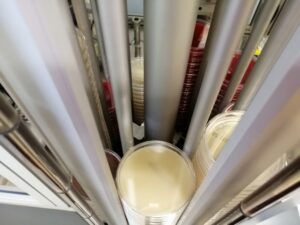
Plates wait in the stacker. Then they wait their turn at the streaker. After streaking, they sit in an output rack until someone moves them or until a connected track delivers them to incubation. If a plate is going to a separate anaerobic chamber rather than a connected anaerobic incubator, add walking time and chamber pass-through.
Five minutes here, ten minutes there. For a non-enzymatic plate, that’s enough to lose a meaningful chunk of reduction. For strict anaerobes, that translates directly to smaller colonies, lower recovery, and missed isolates.
Our in-house data on how oxidation affects anaerobe recovery is here.
What This Costs the Lab
The clinical impact is the part that doesn’t show up on the spreadsheet. A missed Bacteroides from a wound culture means a follow-up call, a possible re-collection, and a treatment delay. The lab cost is the obvious stuff, repeat plating, repeat incubation, the tech time that goes with both. The patient cost is harder to quantify but real, especially for the deep-tissue and bloodstream specimens where anaerobes drive the workup.
If you’re running automation specifically to gain efficiency, losing it to retesting on the anaerobic plates is a frustrating place to lose it.
Where OxyPRAS Plus Fits
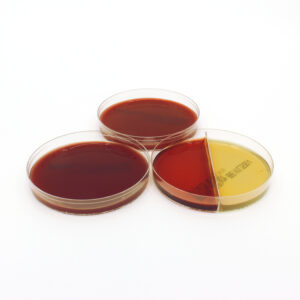
OxyPRAS Plus runs in standard 100 mm petri dishes, so the plate stack, the gripper, and the streaker don’t care that it’s a different product. There’s no integration work and no separate workflow. The plates load and run like any other media line.
The difference is on the deck. The two-hour open-air window means the sorting time, queuing time, streaking time, and walk-to-incubator time all fit comfortably inside the reduction envelope. Colonies tend to come up larger, recovery on the strict anaerobes is more consistent, and the plates carry a 3 to 4 month shelf life, which helps inventory planning.
The lab benefit is straightforward. Fewer reruns on the anaerobic specimens, no special handling protocols layered onto the automation workflow, and the recovery rate on fastidious organisms isn’t dependent on how fast someone walks the rack to the chamber.
The Short Version
Automation is a real win for clinical microbiology. The point isn’t to fight it. The point is that the media you choose has to match the workflow it’s running through, and on a WASP or Kiestra deck, the workflow includes more open-air time than most non-enzymatic plates can absorb.
Enzymatic PRAS is the option that doesn’t punish you for that. If your lab is troubleshooting anaerobic recovery on automated lines, it’s worth running side-by-side plates and looking at what comes up.
If you want to try OxyPRAS Plus on your platform, the Evaluate program covers the trial.