
A New Tool for Your Anaerobe Tool Box... AnaSelect®.

Why Do Facultative Microbes Often Dominate Plates Streaked for Anaerobes?

The majority of patient specimens examined for anaerobes are mixed cultures. Anaerobes are displaced by growth of the facultative microbes in the mix. Generally, facultative microbes grow faster and to a higher cell density than do anaerobes. This changes the relative ratio of anaerobes to facultative microbes to favor the facultative microbe. When the specimen is streaked, the more numerous facultative microbes dominate the plate.

How can this Happen?

Growth sometimes occurs during transport. The biochemical contribution of the specimen can turn the transport system into an active culture. Conditions in the transport system may not be suitable for growth of anaerobes. The facultative microbes grow unimpeded while the anaerobes may be static, at best, or dying-off, at worst. When streaked for isolation, the anaerobe will be buried under the growth of facultative microbes. Specimens that are over-grown with facultative microbes usually cause delay in identifying the anaerobe of interest, which in turn results in delays in reporting out patient information. Delays cost money when measured in terms of patient treatment and patient hospital stays.

Has This Happened to You?

OxyPRAS™ Brucella Plate


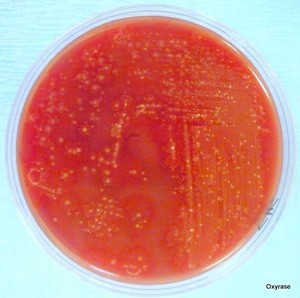
Have you had the ‘I can smell it ... but I can’t find it’ experience? Then you know the frustration of trying to isolate an anaerobe from a patient specimen that has undergone the anaerobe-facultative transition. You may see a plate that looks like this:


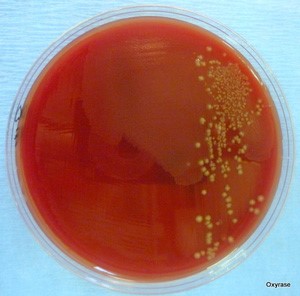
If you had also streaked the specimen onto an AnaSelect® plate, then you would have gotten this...

AnaSelect® Plate


...a plate on which the colonies of facultative microbes have been significantly reduced in number and on which the anaerobe is revealed as isolated colonies.

For details on growth conditions click here.


How Does AnaSelect® Work?

The anaerobe grows on an AnaSelect® plate while the facultative microbes are slowed or blocked from growing. The result is that facultative microbes do not increase in number while anaerobes do. On an AnaSelect® plate, the facultative microbes do not form visible colonies; whereas, the anaerobe grows to form a colony. Since anaerobes are generally slow growing microbes, blocking or holding back growth of the facultative anaerobes allows the anaerobe to become visible on the AnaSelect® plate. On other plates, the facultative microbe would rapidly grow to swamp the anaerobe in a mass of facultative growth. Hence, you can often ‘smell the anaerobe’....but you can’t isolate it.

OxyPRAS AnaSelect® is Compatible with what You Do Now.

The AnaSelect® plate works with any method to achieve anaerobiosis....bags, jars, or chambers. Also, it can be used with other plates you are currently using. There is no need to change anything you do to benefit from OxyPRAS AnaSelect®..

What is the Importance of PRAS in the AnaSelect® Plate?

Anaerobes are fastidious microbes that have a lot working against them in the typical clinical laboratory. We all know about the need for anaerobiosis, or the lack of oxygen, for anaerobes to grow. Oxygen, or its by-products, will stop anaerobes from growing or even kill some anaerobes. One of the by-products of conventionally made commercial plates is the oxidized reducing agent that is made during autoclaving of oxygenated media. Once formed, these compounds can not be removed. They are harmful, and sometimes lethal, to anaerobes. To make PRAS media, first it is made anaerobic before it is autoclaved. This prevents deleterious compounds from being formed. We use Oxyrase® to remove oxygen before autoclaving and again afterwards, when the plate is poured. This protects the plates during drying and bagging and adds other properties to the plate.

Oxyrase® Gives OxyPRAS Plates Advantages That Other Plates Do Not Have!

Because Oxyrase® is an Enzyme System it removes oxygen again and again. It is used to keep the plate de-oxygenated and reduced to prevent formation of deleterious compounds (PRAS) during plate forming. But the benefits of Oxyrase® doesn’t stop there. Oxyrase® continues to protect the plate, and anaerobes on it, when the plate is used. If you work with anaerobes outside a chamber, Oxyrase® keeps the plate reduced while you work with it. Microbes placed on a slab of agar, reduced by Oxyrase®, are protected from oxygen. Anaerobes in a specimen can be easily injured. Oxyrase® has been reported to aid in recovery of injured cells. The presence of Oxyrase® can help to repair some injuries. Furthermore, Oxyrase® gives our blood agar plates a longer shelf-life than you will find for other plates. When all of these factors are taken into account, Oxyrase® adds real value to OxyPRAS plates.

Packaging Makes a Difference.

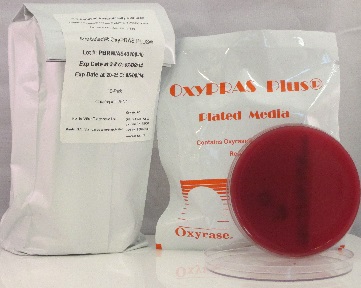
Oxyrase® plates are packaged into pouches with a see-through front. The multi-layered film that make up these pouches provides a barrier to oxygen. We add oxygen adsorbers and desicants to keep the plate in a condition as close as possible to when it was formed. This, together with Oxyrase®, gives the OxyPRAS plate their longevity and quality. Our plates are thicker than most other plates. This is necessary, because specimens with anaerobes are sometimes incubated days longer than for other microbes.


Try the Oxyrase® Advantage!

Oxyrase® plates come bundled with advantages for isolating and growing anaerobes that other media do not have. When you consider the cost (and your time) of working with anaerobes in the clinical laboratory, why would you consider using anything less than the best medium that will deliver the best results? Your time saved is worth the costs of an OxyPRAS AnaSelect® plate. In addition, timely reporting of patient results saves money. Don’t take my word for it....try the Oxyrase® Advantage yourself. Get a sample of OxyPRAS AnaSelect® plates and see how they help to recover anaerobes from difficult specimens.

For More Information about OxyPRAS AnaSelect®
plates including Product Insert, MSDS Sheet,
and Formulation page, click here.

Request a Free Sample

Name:
Hospital:
Address:
City:
State:
Zip:
Phone:
Email: